
She's Hysterical!
The Unfunny History of Women’s Mental Healthcare
March 30, 2026
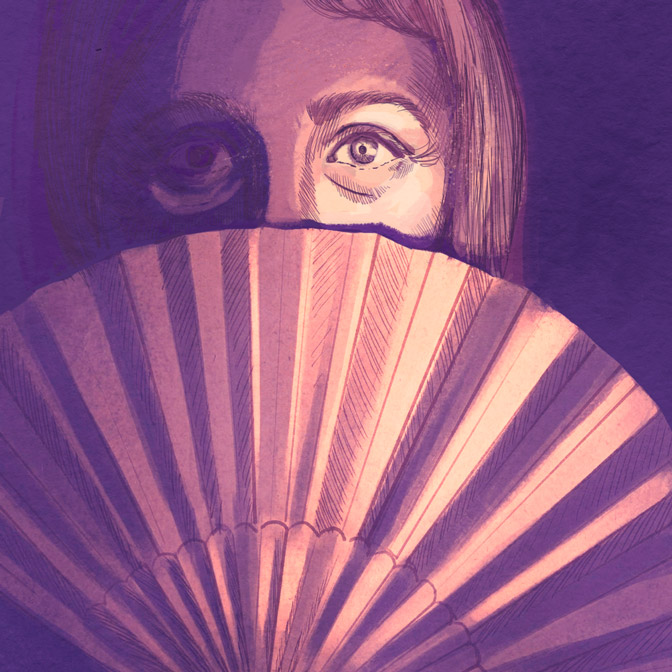
After I graduated from college, which consisted of writing 1-2 essays a week and an 80-page thesis to finish, I struggled with finding the motivation to write and by extension, my mental health.
I decided to send myself away, à la Edna in The Awakening, to take a break and work on my novel. The writing retreat was in the middle of nowhere, Virginia, in a gorgeous historical farmhouse with two floors of porches in front. I was in the yellow-walled “Treetops” room, from which I could watch seemingly endless trains of coal roll by, as well as stare at this gorgeous landscape painting.
But the rule of the retreat was that, besides meal times, conversation was to be kept at a minimum. And so, after spending nearly the whole week alone, staring at the same oil painting, I started to go a bit stir crazy.
At the Friday dinner with all the writers, we all laughed as I explained that I finally understood the woman in The Yellow Wallpaper and had nearly ripped down that painting myself.
Unraveling The Yellow Wallpaper
But the short story by Charlotte Perkins Gilman was anything but funny. Gilman pulled from her own experiences to tell a story of a woman struggling with post-partum depression whose physician husband prescribes her a “rest cure”, a commonly used solution for women’s mental health issues in the 19th century.
Despite the woman’s insistence that this was more than “a slight hysterical tendency,” her husband and brother dismiss her concerns as well as assure friends and family that it was nothing to worry about.
And because of their authority as both physicians and men, the woman doesn’t protest further.
This “cure” consisted of her spending the majority of her time resting in an old “nursery” with barred windows and ugly, yellow wallpaper. Her husband insists she not perform any domestic labor or childcare, only leave the house to get fresh air, and to sleep most of the day.
Her descent into postpartum psychosis is symbolized by her growing distaste for the yellow wallpaper. She begins to see the design move at night, and then becomes convinced that a woman is stuck behind it. The story ends with her locking the door so she can rip the entirety of the wallpaper down, showing her literal unraveling.
A Nap Can Fix Everything
When the main character’s health was not improving, she was threatened with being sent to Weir Mitchel.
Silas Weir Michel was a real neurologist of the time who invented the “rest cure”, a regimen of enforced bed rest, isolation, and force-feeding. As told by Gilman, the at-home routine insisted on “but two hours’ intellectual life a day. And never touch pen, brush, or pencil as long as you live.”
Gilman also expressed that her mental health suffered due to the Weir Michel method. This is unsurprising; isolation is a form of torture, with strict laws even for prisoners to not exceed 15 days.
Without the boundaries of social interaction confirming reality, hallucinations and delusions can occur. A lack of stimulation also shrinks the hippocampus, where emotional regulation lives, and affects brain chemistry, causing depression and psychosis.
This “prescription” was not only deeply ineffective and detrimental to women’s mental health, but it was also indicative of society’s need to maintain control over women. Keeping women isolated, weak, and emotionally and intellectually stifled was necessary to retain the power of the patriarchy.
Live, Laugh, Lobotomy?
After Weir’s method fell out of popularity, a new totally ethical and effective fix was created: Lobotomies!
With such an amorphous thing as mental illness, Psychiatry needed to find physical data. Neuroanatomy research led to the hypothesis that surgical lesions in the brain could sever the connections responsible for mental illness.
Despite unpromising and mixed results of this experimental procedure— including no change, extreme personality change, and death — the practice was eventually deemed successful enough.
Around 50,000 lobotomies were performed in the U.S., of which 60-70% were performed on women. Many of the circumstances that deemed women eligible were not the same for men.
These women were not violent; they were merely more emotional, opinionated, or discontented than their husbands wanted them to be. Lobotomies offered a way to dull a woman into complacency.
One of the most notable victims of this medical atrocity is Rosemary Kennedy. At age 22, Rosemary began showing erratic and uncouth behaviors that were deemed a threat to the family’s public and political image, leading her father to secretly seek a lobotomy for her.
Rosemary was awake during the procedure, in which they continued to cut brain tissue until her communications were incoherent. Rosemary suffered catastrophic complications that debilitated her to the mental state of a two-year-old, including losing the ability to walk or speak.
Rosemary remained in an institution for the rest of her life. Her father never visited her.
Mother’s Little Helpers
Okay, so lobotomies weren’t for everyone. But everyone loves drugs!
After the excitement of WW2, when women had an opportunity to support their country in ways beyond the domestic, life went back to the normal, boring, and exhausting ways of the nuclear family.
Over half of the jobs women worked during the war were taken back by men, and the baby boom forced them to stay home with all their little ones. While some were able to stay in the workforce, many more wanted to.
Alas, you can’t always get what you want, ladies.
But they could offer… a little help.
Are you tired? Try an amphetamine like Benzedrine or Dexedrine! Anxious? Try a tranquilizer like Valium or Miltown! A little bit of both? Try a combination drug like Dexamyl! And after all that, you can’t sleep, we’ve got barbiturates like Butisol!
Finally, a gal could get all the chores done, ease her stress, and get some good rest! How could anything go wrong?
Addiction, actually, to the tune of tens of millions of prescriptions being filled every year for medications like Valium.
Male psychiatrists were more than happy to placate these women with “Housewife Syndrome”, making addicts of even the whitest and wealthiest of women, a fad that still has them leading the charts in prescription drug abuse to this day.
The rise of SSRI’s like Prozac and further addiction research eventually stifled the overprescribing, but those pills were merely a temporary band-aid for a problem that has yet to be solved.
Women’s Mental Healthcare Today
Women’s mental healthcare is still trailing behind in terms of effective therapies. While we are lightyears away from lobotomies, women are still facing discriminatory roadblocks in their care.
We’ve only just started recognizing the differences in ADHD and Autism Spectrum Disorder in girls versus boys, leading to late-diagnoses doubling for adult women from 2020 to 2022.
Due to our “complicated” hormonal schedules, there is even less research on how various pharmaceuticals can affect our cycles and how that can affect mental health. Only recently have we admitted that hormone therapy for postmenopausal women is a necessary part of healthcare.
Women are still seen as overly emotional hypochondriacs, leading to stark differences in access to pain management, emergency care, and disease diagnosis compared to men. I know I’ve never felt crazier than waiting 7 years for a diagnosis I knew I had!
How We Can Support Women’s Mental Health Today
Understanding the history of women’s mental health is key to building more ethical, compassionate systems and encouraging advocacy for equitable treatment.
This sort of generational trauma leads to women being less likely to seek help when they need it for fear of not being believed. We must prioritize trauma-informed care, creating safe spaces to build trust, and ensuring autonomy in women’s care.
I encourage readers to listen to the women in their lives speak about their mental health journeys. As a woman, hearing my mother and grandmothers’ experiences makes me realize how much has changed, and how much hasn’t.
It is equally important for men to hear these stories as well. Last week we talked about men’s mental health crisis, but no one is alone in this.
We’re Here To Support Women’s Mental Health
Handel Behavioral Health is a family-owned business that would be nowhere without the women in it; Greg would not be a doctor without Mary Ann.
We understand that uplifting women and supporting their mental health is vital to maintaining our communities. Our compassionate counselors provide trauma-informed therapy for all of women’s mental health issues, including for sexual assault, domestic violence, eating disorders, and Post Traumatic Stress Disorder.
If you are looking for mental health counseling in Massachusetts, HBH is here to help. We offer both telehealth/online therapy as well as in-person therapy at our offices in Amherst, Springfield, Wilbraham, Natick, and Franklin Massachusetts. Call (413) 343-4357 or request an appointment online today to get started.
About The Author