
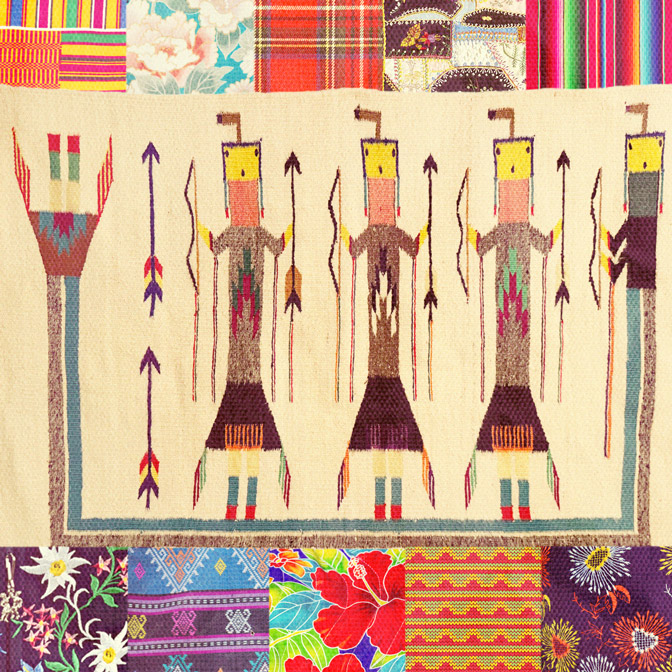
The United States is considered the “melting pot” of the world due to its diverse population. Immigrants from all over the world have come here, sharing their culture and mixing with others’. Each culture has a new type of cheese (or, in the original metaphor, a metal) melting together into a more flavorful fondue1 (stronger metal alloy).
However it isn’t the homogeneity that makes America great, it is the retaining of each individual’s values and traditions, while still being able to respect others’. We are more of a “perpetual stew.”
A perpetual stew or “forever soup” is a pot that is continuously added to and left to simmer, often for years. Everyday, in-season vegetables or freshly butchered meat is thrown in, their flavors melding together but still maintaining their distinct particularity.
When immigrants join us in our perpetual stew, they add new flavors to our culture without losing their individuality. Even when their numbers dwindle, their aftertaste is left with us forever.
American Culture: Given and Taken
A major part of our culture and knowledge comes from the Native Americans. Despite colonizers attempts at eradicating Native culture, the United States would not have prospered as it did without them.
The Natives offered education on their agriculture, holistic medicines, and geography and offered food, pelts, and gifts to the settlers2. In exchange, the colonizers gave them smallpox and then took and took – resources, land, and human lives3.
Natives were made to assimilate; their language and religion were banned and their children forced into boarding schools where they were abused4. The loss of these traditions and the abuse they came with it lead to cross-generational trauma5.
Native American Trauma and Mental Health Crisis
The Native Americans are resilient, despite facing this genocide. They did their best to meld their cultures, create alliances, and resist where they could6.
But they were left with little in terms of population, land, and resources. They continue to face adversity, and continuous attempts at the stealing or polluting of their lands. Generational poverty and trauma has left them with higher rates of PTSD, addiction, and suicide7.
Substance misuse is a common coping mechanism for trauma, but also leads to more violence within their community, and abuse of women and children. This furthers the cycle of abuse and trauma.
Native women are at a higher risk of assault and rape than white or black women, with the majority of their abusers being non-native men8. Rates of suicidal thoughts are higher in native women than any other demographic in this country9.
Are Americans Bad Cooks?
Despite an understanding of the atrocities committed against the Native Americans by the first immigrants, the United States tends to resist anyone following suit.
Africans were abducted as slaves, and when they achieved freedom, still face detrimental levels of adversity in our country and have similar mental health outcomes as the Natives.
Yet Americans reap the benefits of their culture – music like jazz and rap, soul food and barbeque, language and dance10. White Americans, despite their criticism, even mimic their bodies through lip injections and “BBLs”.
This goes for nearly every round of new immigrants to America, no matter the skin color. There is a resistance to change the status quo, yet their cultures are picked through for the parts America likes.
Despite our perpetual stew, made of infinite cultures and tastes, we have yet to learn that loving our country, loving the soup that we have cooked together, means liking all of its parts.
Culturally-Informed Therapy in Massachusetts
If you like chicken noodle soup, but only drink the broth, then maybe you don’t actually like chicken noodle soup. You can’t enjoy the broth without respecting the chicken that flavored it.Handel Behavioral Health therapists are trained to understand a client’s culture and identity. We strive to respect the differences in race, ethnicity, sexual orientation, religion and traditions, and to incorporate this understanding into our practice.
It is vital that clients find a therapist who is culturally competent; clients who don’t feel respected and understood often avoid therapy or don’t receive the proper treatment they deserve.
Find a compassionate and culturally sensitive therapist for you today by contacting us at (413) 343-4357 or request an appointment online. Handel Behavioral Health offers online therapy, as well as in-person therapy in Massachusetts in one of our offices in Handel Amherst, Wilbraham, West Springfield, Franklin, or Natick.
1 Greg and I both fondly remember fondue restaurants – such as the, now defunct, Melting Pot in Providence. As of 2025, there is only one operating fondue restaurant in Massachusetts. What a world.
2 https://www.history.com/articles/wampanoag-pilgrim-peace-treaty-thanksgiving
3 https://hmh.org/library/research/genocide-of-indigenous-peoples-guide/
4 https://www.history.com/articles/how-boarding-schools-tried-to-kill-the-indian-through-assimilation
5 https://tpcjournal.nbcc.org/examining-the-theory-of-historical-trauma-among-native-americans/
6 https://education.nationalgeographic.org/resource/native-americans-colonial-america/
7 https://deconstructingstigma.org/guides/native-american-mh
8 https://deconstructingstigma.org/guides/native-american-mh
9 https://www.fau.edu/sw-cj/news/meldrum-suicidality-research/
10 https://sites.nd.edu/jamesbaldwin/2023/09/04/there-is-no-white-community-cultural-appropriation-and-pop-culture-in-the-us/
About The Author